Northwest Sussex County is New Jersey's wild land. It reaches the primitive core of our beings. Its landscape is largely untamed, only the hand of the plow turns its soil. It's a land whose beauty inspires the imagination and motivates creative fulfillment. Its colorful history is living.
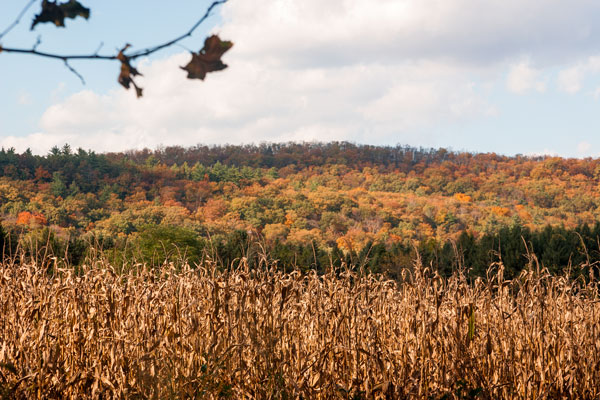
Take a ride on Jersey's wild side for a day or a weekend. It'll change you--like you've been to another land. Grab a map of the county and give yourself up to the gravel back roads that clamber the ancient mountains and valleys, and if you get to a dead end, back up and start over. The Delaware River borders the west side, running 35 miles through the Delaware Water Gap National Recreation Area. The park spans 70,000 acres, with about half in New Jersey and half of that in Sussex County. Route 206 slices the state north and south to take you anywhere, and if you fall off a mountain's southerly side, you'll eventually land on Route 80. Adventure by auto ... you really can't get lost.
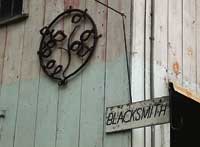
Begin the adventure at Peters Valley Crafts Center, known for its fine crafts workshops and Store & Gallery that represents the work of 350 artists nationwide. The center also serves as the northern entrance to the national park. Peters Valley opened in 1970 when Rosamond DeGelleke, wife of the park's superintendent, came up with the idea after seeing a parkway exhibit of mountain handicrafts on a trip to South Carolina. "She, knowing we had this hillfolk little town here, came back wanting to do the same thing. With a group of people from the Agricultural Extension Service in 1969, they started the center, hoping to increase the income of local rural folks.
Peters Valley has a lease with the park for the land and 36 buildings, with 16 on the National Historic Register. The non-profit education community employs nationally recognized instructors for spring, summer and fall workshops in all major craft mediums. New to the craft center is a bronze foundry built by teacher and bronze caster Mauricio Trenard. The burnout kiln and furnace allows him and other artists to cast their sculptural work at the center and provides a venue for three classes this year on how to make your very own foundry and how to cast bronze in it. The kilns are made of 55 gallon drums cut in half, its 18 x 3 inch insides lined with fire brick and heated with propane.
Here, jewelry has moved into the 21st century -- maybe the 22nd. There are glass bead necklaces on silver in the Store, and delicate bracelets spun like angel hair, and elegant yet funky earrings of metal and stone. There are sexy steel bowls from the blacksmith shop, pretty blown glasses to drink from, metal wall sculptures, a ceramic hippo to keep you company and copper flying fish sculpted from kitchenware. There's pottery and ceramic and wood accoutrements for every house, including a copper wire shade with mother-of-pearl chips. Peters Valley holds a major crafts fair each autumn at the Sussex County Fairgrounds. Peters Valley office: 973-948-5200; store: 973-948-5202.

Not far down the road, NPS 615 bends to the right and a dirt road begins straight ahead. Take the dirt road if you want to go hiking, or take the paved road to the historic village of Walpack Center. We'll do both here, but first we'll go to Walpack Center. Take NPS 615. Look for a red roof and a post office on the left and turn onto Main Road into the tiny village. Look down a maple-lined street with houses on both sides and a church on the right. No one lives here anymore.
Long ago when farmer Isaac Rundle trundled into Walpack to start a post office, the tiny village didn't exist. Walpack was farms, flung as far as a bird could see across the valley, when it, with the rest of Northwest Jersey, was part of Hunterdon County. Walpack was a township then, composed of Montague, Paraquarry, Sandyston and Walpack. The names of its residents are still known Layton, Losey, Roberts . After Rundle became postmaster, he built a general store next to the post office. The post office is now closed and the store is the Walpack Historic Society's museum, open on weekends by chance. The church on the right is used for performances by Cameo Productions, a theater group.
Go ahead, continue down Main Road over two stone bridges built in 1820 to the crossroads in the woods where an old cemetery is. If you go straight, the road becomes Tillman Road that leads to Tillman Ravine, a fabulous hike through a hemlock-rhododendron ravine with a rushing stream. It's a state-designated Natural Area, part of Stokes Forest, with a parking lot. A little bit further is Old Brinks Road, a dirt road that goes gently up and over Kittatinny Ridge (and the Appalachian Trail) to Mecca Lake on Rt. 521 on the southern side. It's a great hike. Park on the shoulder. But back to the corner...
Running perpendicular is Mountain Road, scraped out in 1820 as the Old Columbia-Walpack Turnpike. Left goes back to Peters Valley and is a pretty drive along a hillside overlooking fields to another distant ridge and the river and PA. This gravel road with ruts runs past abandoned barns and homesteads, their remnant fences and garages reclaimed by nature. Go there later.
For now, turn right onto Mountain Road to go to Buttermilk Falls, a roadside extravaganza. Buttermilk Falls slides down the steep side of Kittatinny Mountain. The Appalachian Mountain Club and other volunteers built a stairway beside the 90-foot falls. The water bounces down the hill, spraying froth till it ripples out to a shallow pool, then slides through a culvert under the road. It meanders through the woods on its way to the Flatbrook and the Delaware River.
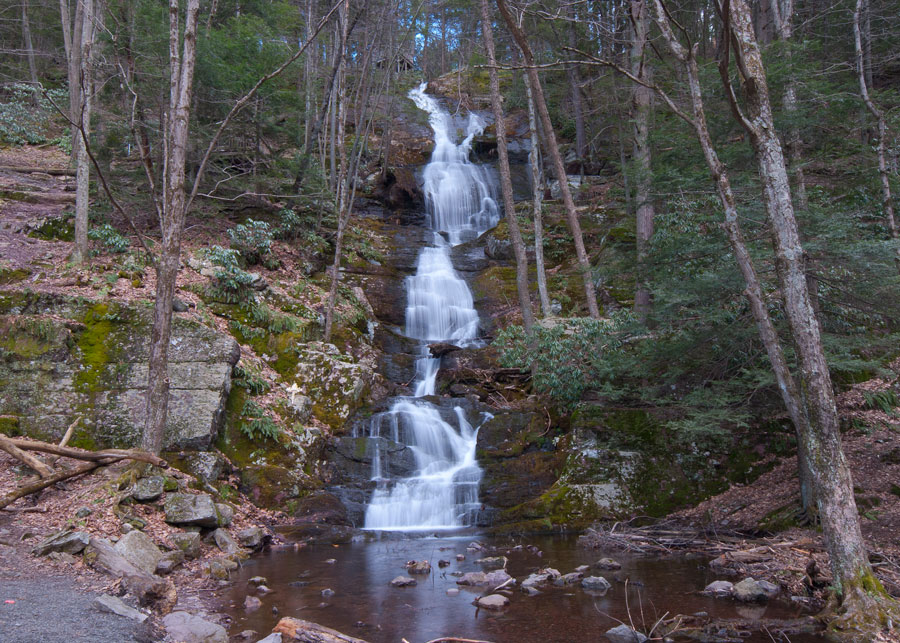
At the top of the stairs, the blue-blaze trail crosses the stream and continues for a long uphill climb, ultimately reaching the Appalachian Trail. But for an easy walk, follow the streambed with a series of shallow waterfalls. Slabs of moss-covered shale that drop into gentle eddies are made for adventurers. Check out the caves maybe bear dens with care, and look for evidence of forest critters feathers, hair, empty nut shells on rocks.
After you've had your fill of the falls, continue on Mountain Road to Old Mine Road, the oldest commercial road in the East, legend says. At the fork, stay to the gravel road on the left next to the river. There are telltale trees and driveways of old homesteads here where Isaac Rundle lived, as did the Rosenkranses who constructed the Van Campen Inn,which soon appears on the right on a spit of grass carved from fields and woods. This 1750 Inn is open for tours on Sundays from 1 to 5. Up the hill behind it is a cemetery with unmarked graves of 15 to 20 African slaves who worked for the Rosenkranses, Van Campens and other wealthy families over 200 years ago. During English rule in Colonial times, from the early 18th century to the American Revolution, there were slaves here. Their duties were domestic and skill-based like blacksmithing, says John Wright, archeologist and chief of visitors' services and cultural resources for the national park. New York University recently dug up the graves. "You can see where the ground undulates and the grave pits. That's a story that wasn't told."
The Delaware River is beautiful to canoe or kayak, but rangers warn wear a floatation device. "Fishing is fantastic in the fall," says Wright. A Jersey or PA license will do. The water will still be warm in September, and Ranger Ron says that people can swim but the river is a lot wider than it appears. "Stay close to shore. Drowning is a popular activity. There is a current and there's no place of reference to judge how wide the river is," he says. "You get out in the middle of it and it's an optical illusion about how big it is."
For those who want to wade in the water and explore, Minisink Island is fun. The island and parts of nearby Pike County, PA and Sussex County compose the 1,320-acre Minisink Historic District, a National Landmark since 1993 and one of the few archeological historic landmarks in the Northeast. "As home to one of the last villages of the Munsee-speaking Delaware Indians before Europeans settled the area, it has a unique significance to the Native American presence here," says Wright. From this last village, the Indians moved westward to escape encroachment of the land by the Europeans.
Wright says there are 19 archeological sites in the district and one standing structure the Bell house on Old Mine Road built in 1720, a stone house with wood shake roof that "looks like a Dutch cottage, probably the oldest house in the park." Legend says that its cellar has a tunnel that leads to the stream bank for escape when attacked by Indians. Farmers carried muskets. "The Delaware tried to remove by fire or shotgun, the settlers to get them to leave the land," says Wright. "We were here to colonize. The Delaware figured that out and in order not to have conflicts, they move west."
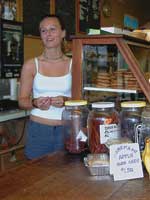
If your stomach is grumbling, take a quick detour to the Hainseville General Store on Rt. 206 South in Hainseville. It's worth the stop. Megan Horst, caterer, whips up many of the goodies right there apple crumbcake and other sweets, salads, soups, hot pastrami, reubens and any other sandwiches you can think of. She lures in the locals and commuters at 5am and brings them back for lunch and dinner on the scent of "Daily Specials," such as homemade chili with cheddar and onions. There's all the usual candy, drinks, greeting cards, pantry supplies, deli food, bit of produce and firewood. Megan and her husband Bob own and operate by the 120-year-old general store. Bob stocks the goods on his collection of antique cupboards and showcases. The store is open every day from 5am to 8pm.

There are a number of areas to visit in the northern reaches of Sussex County. The Layton/Hainseville area is a quickie if you want to see a turn-of-the-20th century country town with interesting architecture. Take Rt. 206 north of Stokes State Forest, and turn right onto Rt. 560 at Rosie's Pizza to Layton. The town is named after John Layton, first general store owner and postmaster. The store still stands with new owners who are related to him, we're told. After exploring the village's side streets, swing back onto 560 and continue on to see the privately-owned Dingman's Ferry Bridge, built in 1898 after the first three bridges fell down. Zip back and go left onto Rt. 645 (Layton Hainseville Road) out to Rt. 206 again. Head for the nearest campground, for this is the county's season of color, and the place to be in fall.
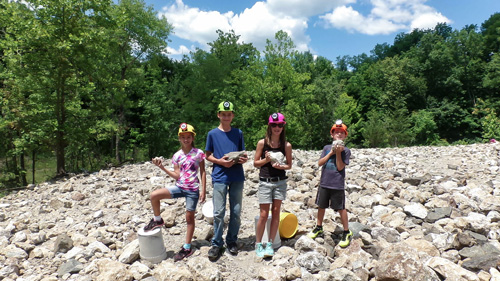
“The Fluorescent Mineral Capitol of the World" Fluorescent, local & worldwide minerals, fossils, artifacts, two-level mine replica.
Peters Valley shares the experience of the American Craft Movement through interactive workshop learning through a series of workshops. A shop and gallery showcases the contemporary craft of residents and other talented artists at the Crafts Center...ceramics, glass, jewelry, wood and more in a beautiful natural setting. Open year round. Closed Thursday.
Follow the tiny but mighty Wallkill River on its 88.3-mile journey north through eastern Sussex County into New York State.
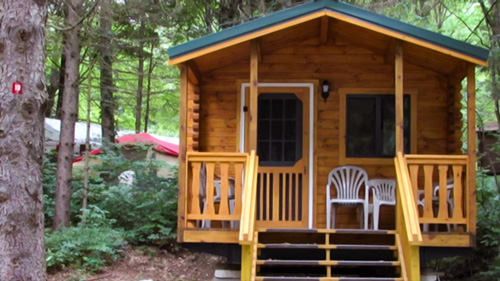
Located in Sussex County near the Kittatinny Mountains the camping resort offers park model, cabin and luxury tent rentals as well as trailer or tent campsites with water, electric and cable TV hookups on 200 scenic acres.