New Jersey has long been home to orchards. Much of the terrain in the northwestern section tends to be rocky and hilly, suited more for planting fruit trees than for field crop production. Although most of us think first of apples when we think of tree fruit, New Jersey is the fourth largest peach producing state in the nation. Apple trees do outnumber peach trees in northwestern New Jersey, but local apple growers just can't compete with the volume produced in states such as New York or Washington. By late summer, when apples, peaches and pears ripen, local orchards have already produced a full season's worth of other tree fruits and can keep our refrigerators stocked with fresh pickings from June through November. Sweet and sour cherries, plums, nectarines and peaches round out the just-past summer offerings, so plan ahead for next season's picks.
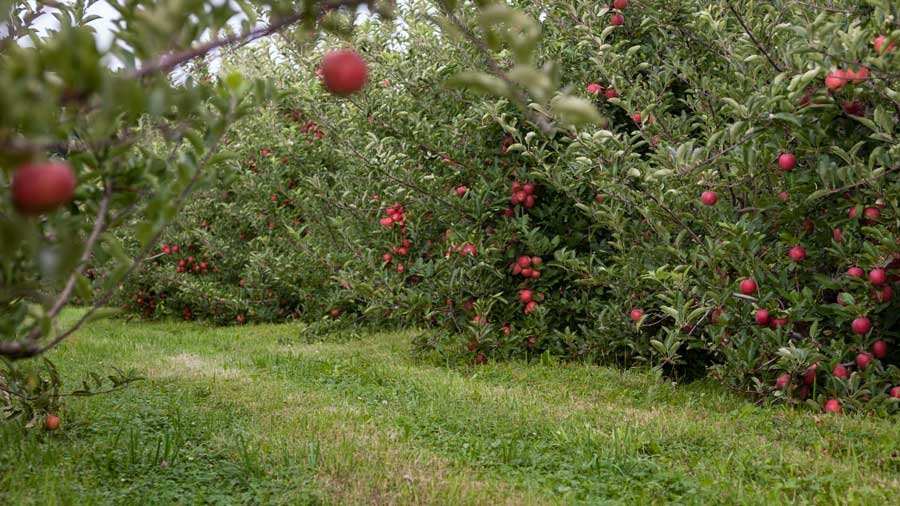
The orchards here come in all shapes and sizes, from small dedicated groves, with a dozen acres in production, to larger 100-plus acre farms with vegetables, livestock or grains in addition to tree fruit. No matter what type of orchard a grower cultivates, many of the issues and concerns related to producing a viable tree fruit crop and bringing it to market are similar. Growers large and small, running diverse farms or concentrating on a crop or two, all confront the same challenges.
Good help is hard to find in any business, and the task of growing healthy trees requires constant attention, groomed with years of experience. Labor is difficult, especially with the pruning of the trees. It's hard to teach someone the proper way of doing things.
Proper pruning and thinning of apple trees determines the quantity and quality of the crop. Apples are naturally biennial, so when there is too much fruit on the trees, they don't have the energy to make next year's buds. When there are only a few apples on the trees, the trees make too many next year buds. It's a vicious cycle, and the apple farmer's job is to trick the tree into producing annually- an art not a science. People who have been doing this a lifetime have a second sense about thinning.
Government regulations are another concern of many of the farmers. Because the cider is marketed and sold in a different location than where it is made, it has to be pasteurized. The equipment investment, on top of the time and effort necessary to file the ongoing reports, is immense. Some of these regulations may seem unreasonable and burdensome to farmers, and they are many times redundant. Simplification and streamlining of the paperwork would make more sense, and farmers could more spend time actually farming. Even though farmers could reach new markets with a pasteurized cider, upfront costs and ongoing government requirements make it difficult.
Another main concern is crop damage caused by wildlife. Bear damage has been a visible public issue, as the debate over whether New Jersey should offer a bear hunting season is in the news each year. Bears are often so content eating the fruit right off of the trees that the traps set by the Division of Fish and Wildlife won't lure them from the orchard! Farmers can obtain distress permits, allowing them to shoot wildlife in certain circumstances where their crops are threatened. But some farmers are unable to secure hunting permits because of their proximity to residential development.
Tree fruit in New Jersey is a difficult crop to grow due to the high insect and disease pressure found in the northeast and it's very difficult to have organic tree fruit production on the northeast coast. Some farmers have organic trees, but their production is extremely low because there is so much loss. There simply aren't effective organic chemicals to handle certain insects and diseases.
Local farmers now predominantly use Integrated Pest Management practices, or IPM, to monitor the crop for insect issues, and to recognize when to take action, what specific chemical control to use, and how to use it effectively at lower levels. The chemicals used in today's tree fruit production are more specific, and the standard is to spray only what is necessary to prevent problems. Farmers aren't likely to overuse these products anyway, because they don't come cheap! Appropriate application, to ensure a quality, productive crop, is the norm.
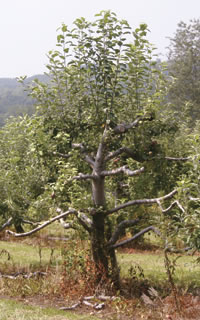
No matter what the farmer's chemical arsenal, disease is insidious, and vigilance is the number one weapon. Fire blight, a disease, which occurs sporadically in Northwest New Jersey's apple and peach orchards, can cause extensive tree damage when it rears it's nasty little head. A highly contagious bacteria that infects a tree's vascular system — spread by insects, wind and rain — the blight has been known for 200 years. Yet, fire blight has no known cure, and no perceptible pattern to its onset. Infections are controlled by amputation; removal of damaged limbs to save the tree. Since the first signs, farmers must visually inspect each limb in the entire orchard, pruning when necessary and using antibiotic sprays to control recurrence. After pruning sick sucker shoots with Clorox dipped tools, they should be burned immediately. Yet the Forest Fire Service wants farmers to file applications, get certifications from "experts", get lab reports, pay permit fees, and wait weeks and weeks for special infested plant life burn permits. By the time the burn permit arrives, the bacteria has spread on the breezes to the next county!
And the weather? Even a relatively farmer-friendly summer can throw a few curve balls. A hot spell in mid August can devastate premium peaches, bruising them and wrinkling their skin.
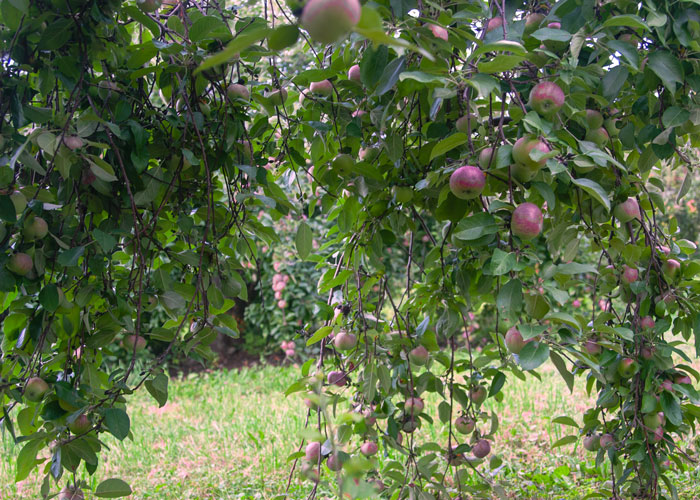
After planting, nursing, grooming, medicating and dodging bullets all summer, farmers still need to market their produce. A few do some specialty wholesaling to major grocery stores, but it is impossible to compete with large out-of state growers on high volume prices. Most local orchards retail the majority of the crop directly to the consumer: at farmers markets throughout the region, at farm and at their own on-site markets and stores. Thousands of families visit orchards to pick their own fruit. And orchards have become popular destinations for school groups.
One thing is for sure: nothing is wasted. Blemished fruit is used in on-site bakeries for pies each weekend during apple picking season and countless apple cider donuts. And some farms make their own cider, crushing ground-up apple "pumice" on a wooden press. It takes a bushel of apples to make three and a half gallons. Each brew is a mix of varieties and ratios: Red Delicious for sweetness, Winesap for tang, McIntosh and Empire for body.
With all these trials and tribulations, why do you think these farmers go to all the trouble? Take a walk through a Skylands orchard and see for yourself!