
History
Along the Old Mine Road
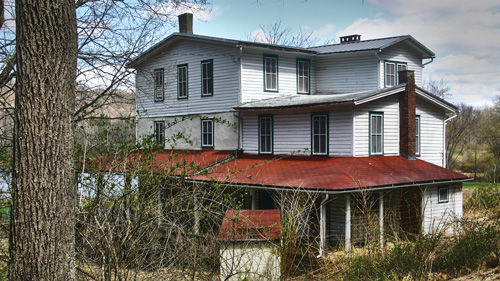
In the 1600s Dutch miners discovered copper ore in a beautiful ravine located about seven miles north of the Delaware Water Gap. To access the ore and to transport it to Kingston, New York, they constructed a road, now known as the Old Mine Road. Primitive by present standards, it was a major undertaking in its day, and legends of the road and its Dutch miners have persisted for over two centuries
Archeological Sites in Northwest New Jersey

New Jersey offers a vast repository of ancient treasure. Beginning with the arrival of paleo-Indians, humans have hunted, gathered, plowed, mined and built across New Jersey for thousands of years.
Bald Pate Mountain, Washington's Crossing, Howell Farm
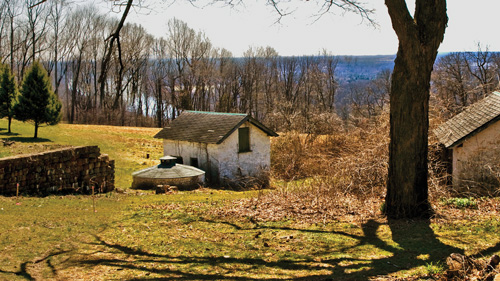
Just a few miles south of Lambertville lies an area ripe for weekend adventure and exploration. Components of local, national, and natural history are well represented, as well as brilliant prospects for craft seekers, hikers, mountain bikers, horseback riders, and picnickers.
Learning Lenape
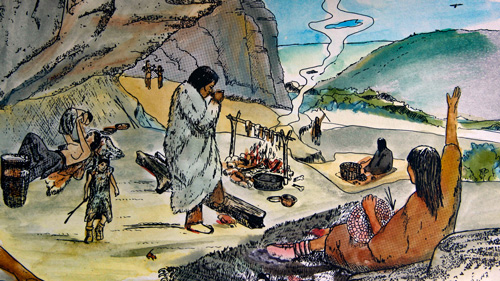
For over 12,000 years the Lenape and their ancestors occupied northwestern New Jersey. Who were they? How did they live? What kinds of tools did they make and use? Archaeologists have been trying to answer these questions for over a century.
Lenne Lenape Indian Village
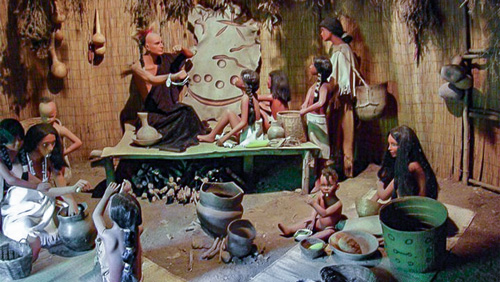
The easiest path to an appreciation of the Lenape is across the bridge to the Indian Village at Waterloo. Developed in1988 by archaeologist John Kraft, the recreated village has introduced the Lenape way to hundreds of thousands of visitors.
Old Mine Road
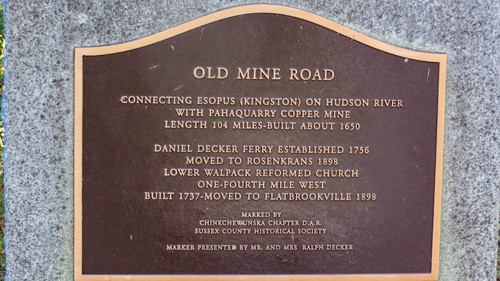
In many places along the Old Mine Road within the state of New Jersey, neglect and the sharp edge of the budget axe have scraped the pavement off the surface, and revealed the powdery and pocked dirt origins of this ancient trail, said by some to be the oldest commercial road on the North American continen
Pequest Pilgrims
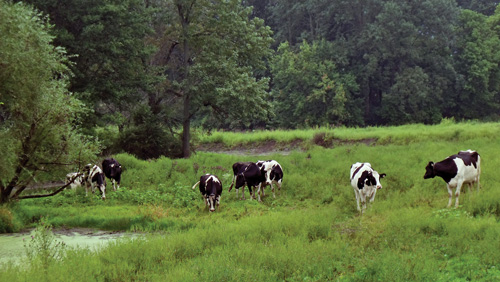
Immerse yourself in the season's beauty, the region's heritage, and a spectrum of natural features along this forty-mile loop that parallels the Pequest River through its upper reaches,
Picatinny Peak
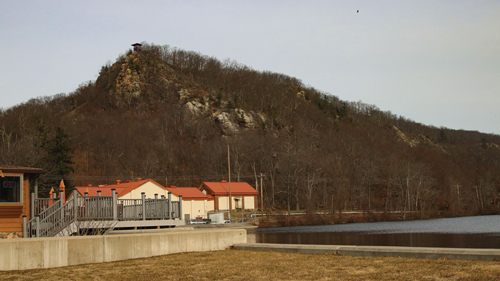
The Cultural Resource Program at Picatinny Arsenal has documented dozens of historic and Native American archaeological sites that tell a story that spans centuries in the New Jersey Highlands.
The Walking Purchase Healing Journey
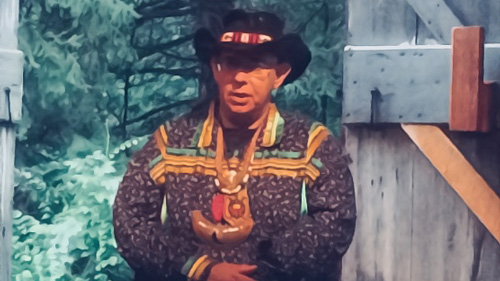
How do we reconcile disgraceful episodes in history? On September 21, 2019, a group of people began the process by following the route of the Walking Purchase of 1737, a deceitful attempt to acquire prime Lenape hunting grounds.
Voices of the Land
A lucid narrative spiced with a series of stories told by local experts, historians, and residents, linked with images from a universe of sources, make this fascinating chronology comprehensible to everyone.
Western Highlands: The Scenic Route
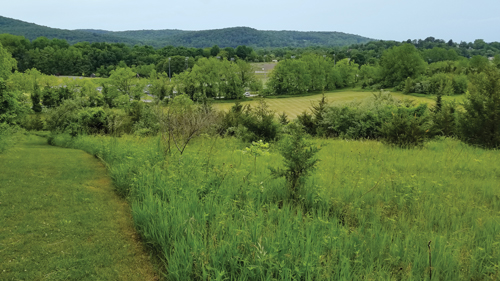
The Byway reveals scenic, historic, archaeological, cultural and natural intrinsic qualities of the Vernon and Highlands area. There are two parts to this scenic puzzle: a straight line from Route 23 to Warwick, New York, and an adjacent loop in Vernon.
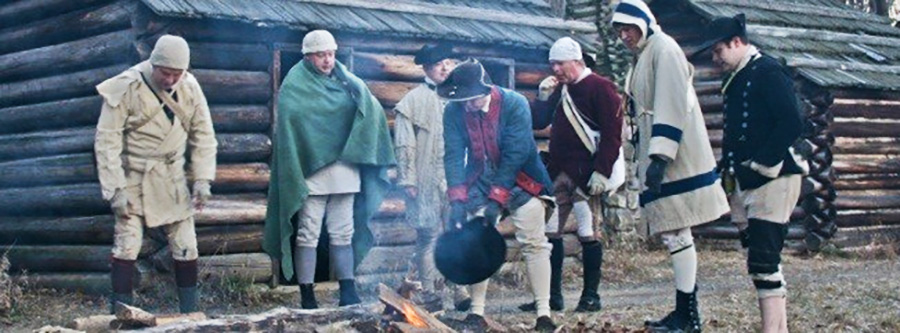
American Revolution Anniversary
General George Washington and the Continental Army spent almost half the American Revolution in this small state.
Battle of Bound Brook
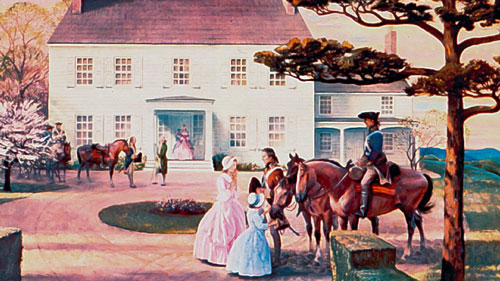
Among the battles and skirmishes to take place in New Jersey during the War of Independence, the Battle of Bound Brook was an early, though not crushing, defeat on the record of the Continental Army in New Jersey.
Denville Detour: Jonathan's Woods and More!
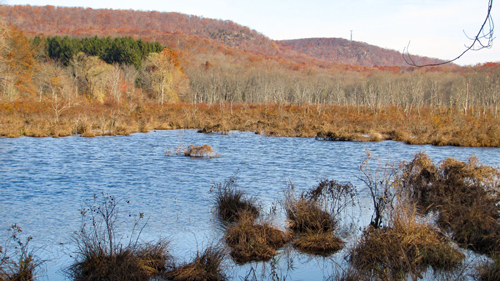
Even today, if you needed a natural hideout--a really good one--Jonathan's Woods could work. This six hundred plus acre pocket of undeveloped property, lies not far from one of Morris County's busiest highways: Interstate Route 80. And yet the tract offers unexpected isolation. You could, as they say, get lost here.
Eminent Remains
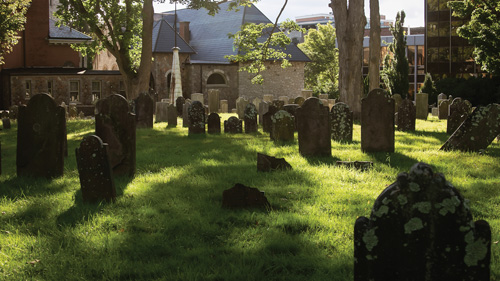
A visitor walking around the Burying Ground will recognize two things right away: a lot of gravestones corresponding to Morristown street names such as Mills, Cutler, Condict, DeHart, Vail and Phoenix (to name a few); and what the ravages of time and nature can do to a place.
Guardians: Knox, Vanderveer and the Pluckemin Cantonment
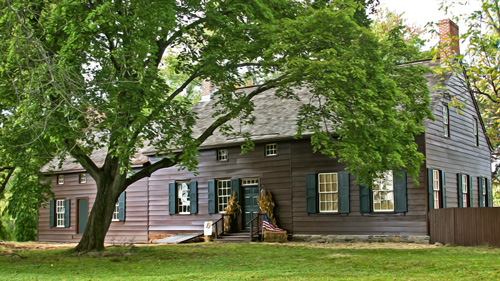
The Jacobus Vanderveer house is the only surviving building associated with the Pluckemin encampment.
Hampton's Map
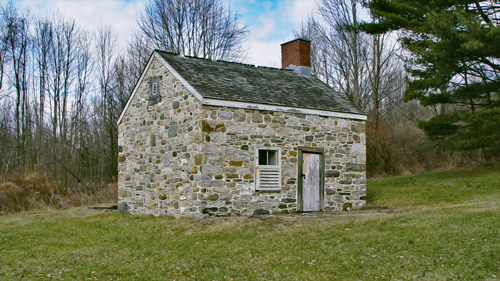
Trace a line of forts that protected New Jersey's northwestern frontier along the Delaware River during the French and Indian war.
Hardscrabble: A Hike Through The Hollow
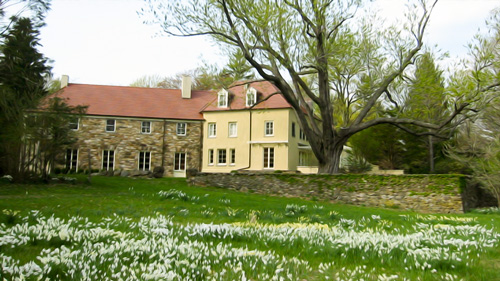
Journey down to the northwest corner of Bernardsville, to a road named Hardscrabble, and explore trails that crisscross through a National Park and a wildlife sanctuary, both of which offer wildlife and landscapes of wooded hillsides, open meadows, and streams.
Historic Hunterdon Taverns
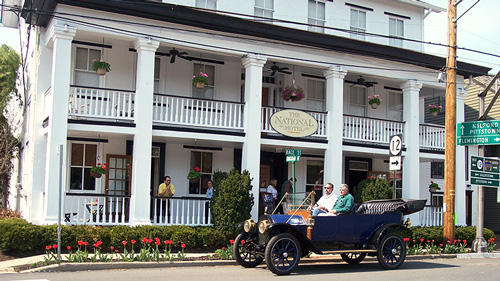
In Hunterdon County, which celebrates its 300th birthday this year (2014), hundreds of the oldest taverns are now mostly forgotten, their scant traces to be found in a few history books or a scattered handful of ruined foundations located only by the most persistent.
Lower Musconetcong Valley
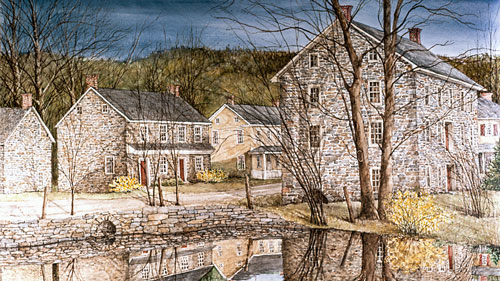
Taking Route 519 south from Alpha through Springtown, the narrow macadam curves west as it enters the lower Musconetcong Valley and joins Route 627. This, 627, is the route to stay with for 519 soon deserts us and goes off to Milford. Route 627 hugs the lower Musconetcong River for its last few miles of existence through a little-known collection of ancient settlements and beautiful farms.
Morristown National Historical Park
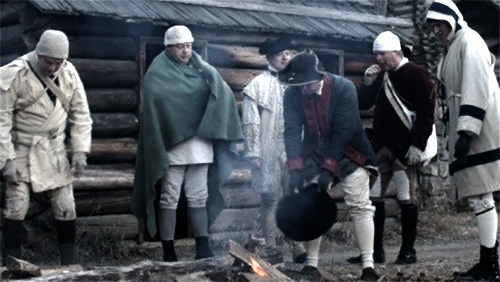
To understand why it's a great story, walk to the top of the hill in Jockey Hollow that held 200 soldier huts in early 1790. Walk up one day in January and imagine staying there until it gets warm enough sometime in April to take off your down jacket.
Packed To The Rafters
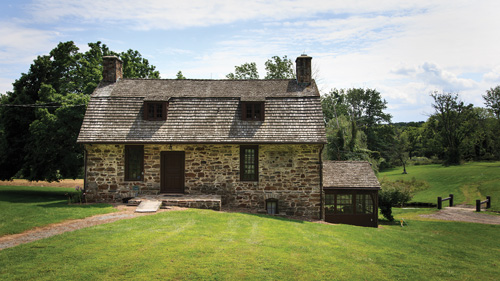
The Bouman-Stickney Farmstead in Readington is well into a new chapter, one written for posterity.
Rushing Water Places: Parsippany Heritage
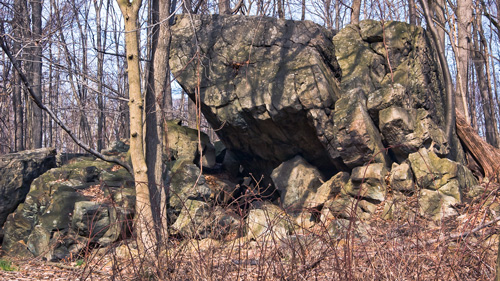
Phonetically "pa-sippo-nong", from the native Lenne Lenape name for "rushing water place", Parsippany is a sprawling highway crossroads on the eastern side of Morris County; where the waters still flow, but commuters now do most of the rushing. But the township's Colonial past and agricultural, and industrial heritages have left some interesting places to see.
Schuyler-Hamilton House
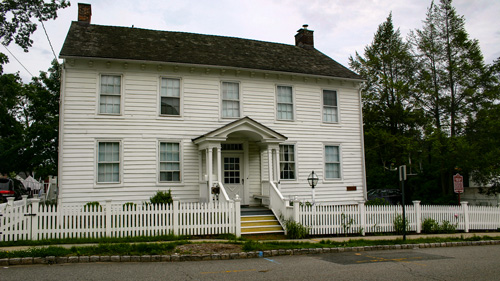
Romance ensued between Betsy Schuyler and Alexander Hamilton, as the young, ambitious soldier courted the beautiful socialite in this historic Morristown home during the 1779-80 Revolutionary War encampment.
So This Is Quakertown
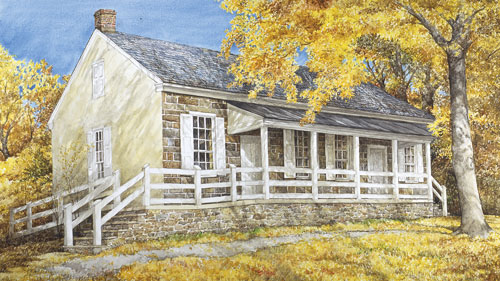
Located a mile apart in the heart of Hunterdon County, the villages of Pittstown and Quakertown still retain their old-time small-town charm. And both were both affected by the Revolutionary War.
The Frontier Guard
Two decades before the American Revolution, the Royal Province of New Jersey prepared itself for the culmination of 70 years of bickering between the French and the English colonists.
The Roseberry-Gess House
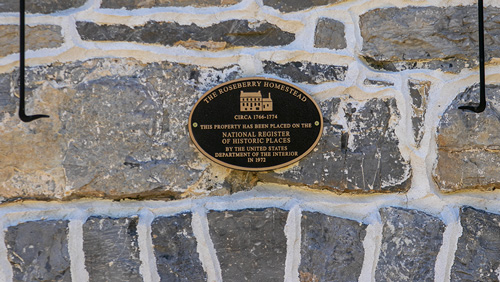
Perseverance eventually led to preservation, and today the oldest building in Phillispburg may be among its most appealing.
Union Forge and the Taylor Steelworkers Greenway in High Bridge
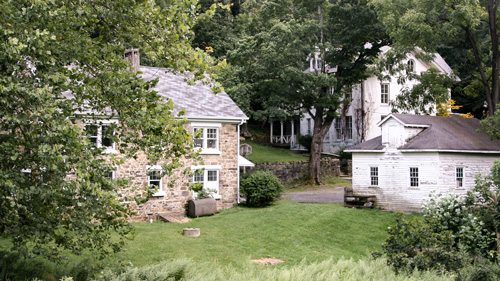
The Hunterdon County Borough of High Bridge would on its face appear little different than any of the other many municipalities in New Jersey. However, the sign which welcomes those who pass through this sleepy little town with the words "Settled in 1700", implies a long abiding heritage: a story of the workers who helped shape the history and destiny of the United States.
Van Campen Inn and Fort Shapanack
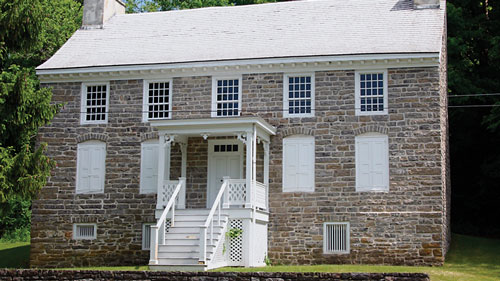
The Delaware Water Gap National Recreation Area (DWGNRA) covers a 40-mile stretch from the Delaware Water Gap to Port Jervis, NY. Interesting and scenic old roads can be found throughout the area, but none possess more mystery and legend than New Jersey’s Old Mine Road
Washington Museum
Visitors to the Skylands can find something of our national identity, and solemn beauty, in the woods and hollows and historic structures where, in “The Hard Winter†of 1799-1780, Gen. George Washington and his army found refuge. Morris and Somerset counties are home to four national treasures from this crucial time during the Revolutionary War, places important in the history of the defense of the early American n
Mining
Andover Mine
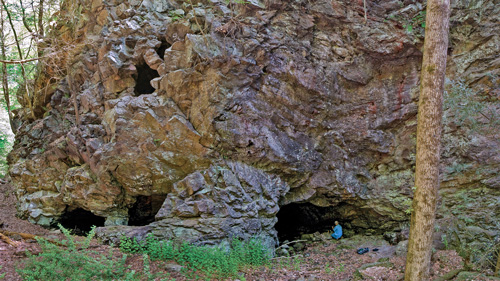
What's in a name? As far back as the early 1700s the name Andover was used to refer to the whole general area. Over the years, various sites have borne the Andover name, including local iron mines, forges, furnaces, factories and settlements with a connection with these early iron interests.
Franklin Mineral Museum
Is it the bronze statue of the miner on the front lawn greeting the visitor or perhaps the full-size replica mine inside the building? Or could it be the lure of dinosaur footprints from New Jersey, the world's largest polished slabs of petrified wood, scorpions, dinosaur dung, and over 3000 specimens of local minerals that brings nearly 20,000 school-age children to the Franklin Mineral Museum each school year.
Iron, Sparta Mountain and Edison
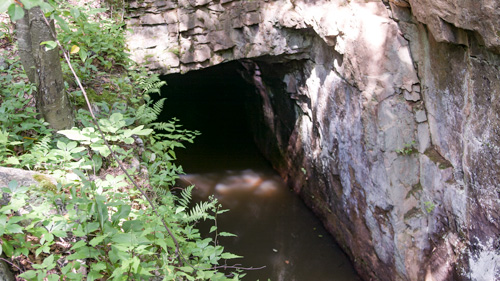
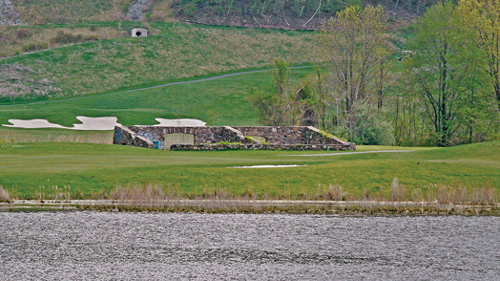
The sustained productivity of the Sparta Mountain iron mines, which began in the late 1700s, attracted the attention of Thomas Edison, who built a massive experimental plant to process iron ore and a namesake village in 1889.
Ironia
134 years ago, in 1871, a small section of Randolph Township was given a name, and an identity. It was born when the booming iron industry in Morris County was the third largest in the nation
King of Drakesville
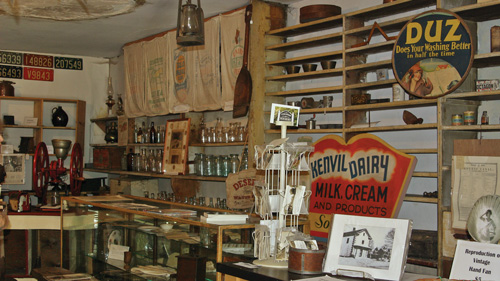
Just off the old, now-vanished, Ledgewood Circle, a stone's throw from the mall, the Drakesville Historic Park pays tribute to Morris County's pedigree of innovative pioneers.
Long Pond Iron Works
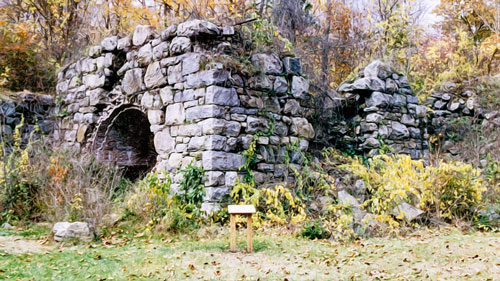
Take a ride to Long Pond Ironworks State Park in West Milford and park at the visitors center. Walk past the old stone-rubble houses sitting like giant sculptures on the lawn, amble down into the woods and look for the dirt crossroads surrounded by trees and the ruins of a town. The area now called Hewitt was once the Long Pond Ironworks.
Mines, Metal and Men
There is a thread of heritage and industry that began in the New Jersey highlands centuries ago, before America officially started. If you know about it, a ride on the interstate becomes a little more interesting as you approach the hills on the horizon, passing through corridors cut through the earth. And turning off onto a county highway becomes a tour through some of the richest history in America when you really know where you ar
Mt. Hope Mines
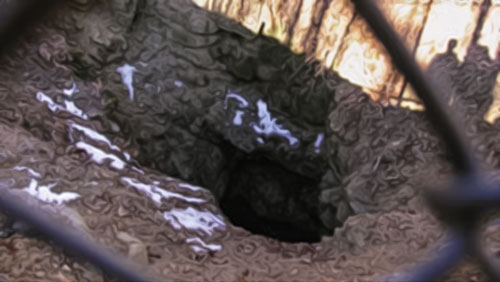
Ever wonder about all those depressions you see in the woods? Or old woods roads or dug out trenches with mounds of rock or soil around them? What went on around here, anyway?
Oxford Furnace
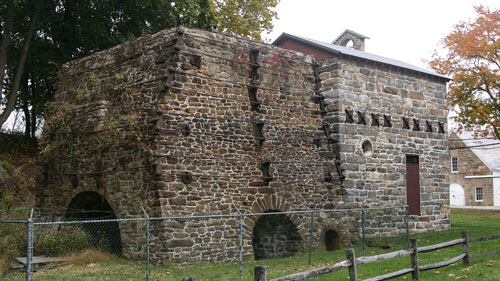
What most strikes the first-time visitor to the Oxford Furnace is how tall the stone structure is--over two stories high--and how utterly intact it remains, despite time and weather taking its toll
Pequest Furnace
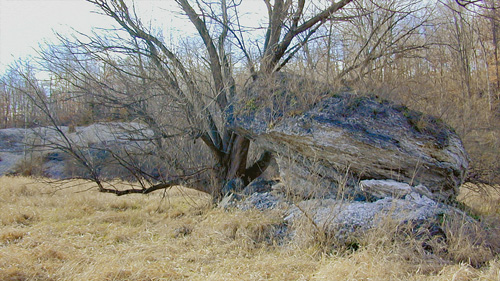
The Pequest Furnace played a role in the Industrial Revolution along with dozens of other sites in Northwest New Jersey. However, the part played here has been relatively obscure, pieces of a puzzle hidden in the Warren County woods.
Sterling Hill Mine Tour and Museum
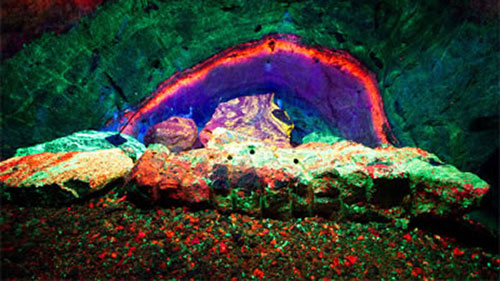
Gem lovers, adventurers, history buffs take note! A labyrinth of marbleized tunnels gilded by a multi-color glow of fluorescent minerals below the earth awaits at Sterling Hill Mining Museum, which includes the Thomas Warren Museum of Fluorescence and a 5,000sf mining history exhibit hall.
Super Intentions
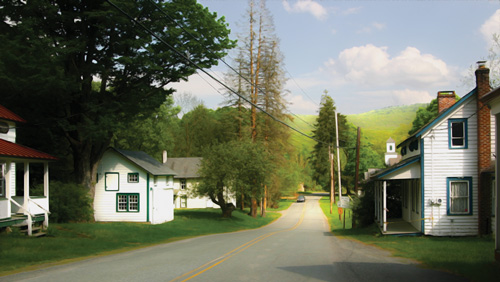
The fiftieth anniversary of Delaware Water Gap Recreation Area in 2015, which coincides with the hundredth anniversary of the National Park Service in 2016, invites reflection on the past—and a focus on the future.
Wawayanda State Park
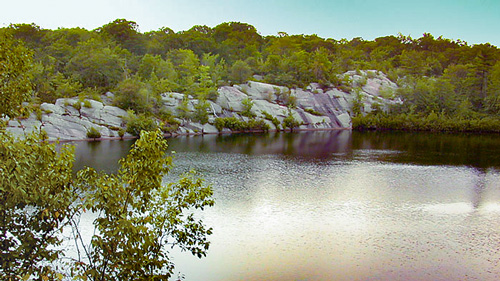
As wild as its name, the land of "winding, winding water" is home to Indian shelters and some of the best bear dens in NJ, a lake to swim and boat on, great gobs of pudding stone to climb, rock to scramble, ledges for leaping, primeval forest, 20 miles of Appalachian Trail and so much more
Wildcat Ridge Wildlife Management Area
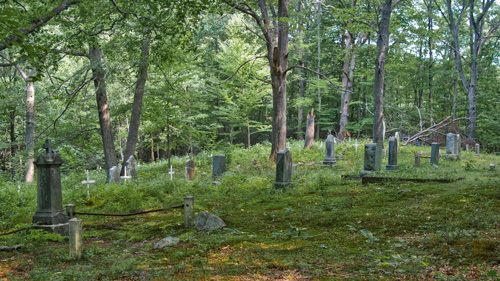
Tucked between Rockaway Township's town of Hibernia and Split Rock Reservoir lies a large portion of Wildcat Ridge Wildlife Management Area, one of New Jersey's many multi-use WMAs
Zinc Mines and Fluoresence
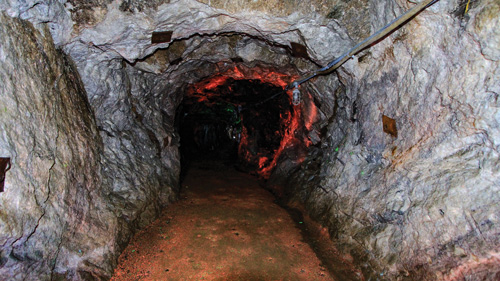
The Sussex County Mining Heritage Corridor is a remarkable tribute to the heritage of the men, their mines, and vast mineral riches they discovered. There is no other place like it in this world!
Industrial Era
A Walk Through Mount Tabor
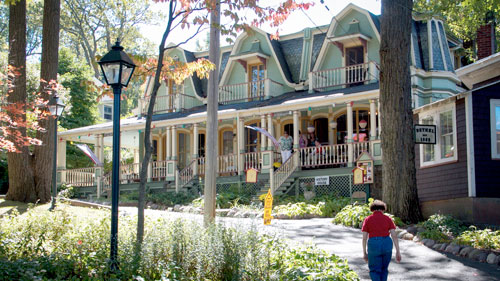
The tall iron arch at the foot of the high hill signals something special. Overshadowed by traffic on Route 53, the arch?s invitation is bold, but easy to ignore. It announces a name in bright letters: Mount Tabor. But for many passersby what lies beyond remains a mystery.
Big Skylands Country
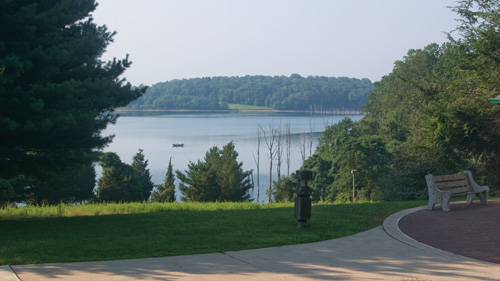
Warren County's Scott's Mountain, so named since at least 1885, is known locally as Montana Mountain, named for the small hamlet that sits on its scenic plateau. Nearby Merrill Creek Reservoir, with its vast open waters and network of wooded trails, is deserving of any excursion up the mountain. The trip back down into and through the Pohatcong Valley is equally rewarding for students of history and devotees of the outdoors, especially in autumn when you might even spot flying pumpkins.
Bridges on the Delaware
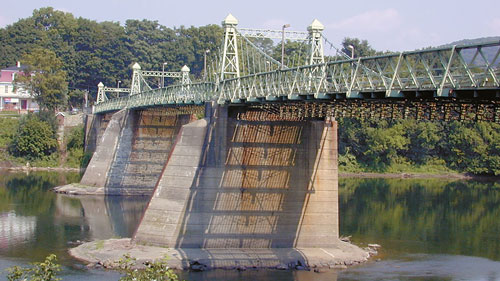
Most of the original bridge sites on our Delaware River still exist and still hold bridges. The original structures-- wooden, covered bridges-- have been replaced by steel, open-decked spans. But most of these "modern" steel river crossers have been in existence a hundred years or more, and are no longer really modern. Most are still supported by the original stone piers and abutments.
Civil War Reenactments
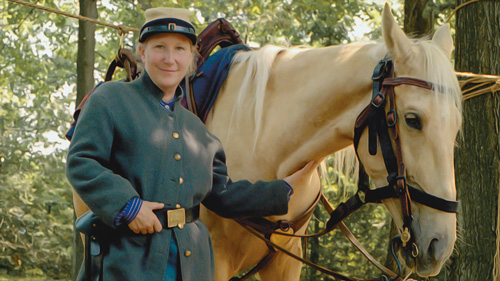
Almost 58,000 New Jersey men served in the Civil War. With reenlistments, the state would eventually receive credit for more than 80,000 terms of service. Its men fought at Gettysburg, Antietam, Spotsylvania, the Wilderness, Winchester, etc.: they saw tragedy and triumph while participating in the nation's epic struggle.
Foggy Mountain Breakdowns
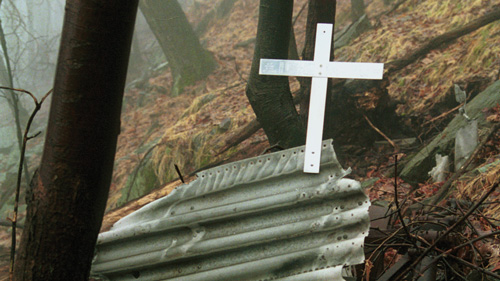
Although there may have been as many as ten plane crashes along the Kittatinny Ridge in Sussex and Warren Counties, few people are aware of them. Due to the very rugged nature of the area's mountainous terrain, some of the wreckages have never been completely salvaged, and pieces still lie there.
Measures of Devotion
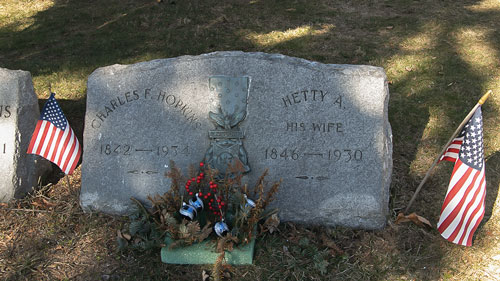
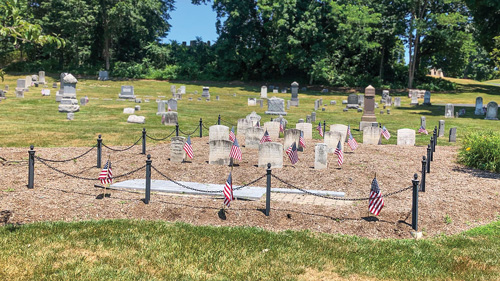
The legacies of McAllister, Hopkins, Bailey, Ryerson and other heroic figures from the Civil War are told by monuments, museums, and living history groups.
Milford-Montague Bridge
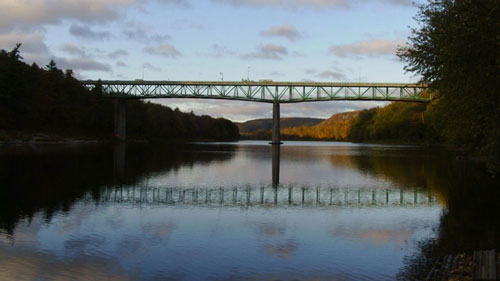
I learned that the new bridge was opened in Dec. 1953. That meant that my memory of going over the old bridge, which would have been that previous summer 1953, was when I was two-and-a-half years-old!
Morristown in the Civil War
Though better known for its role in the Revolutionary War, Morristown has a surprisingly rich connection with America's "Second Revolution," the Civil War.
Morristown: Better With Age
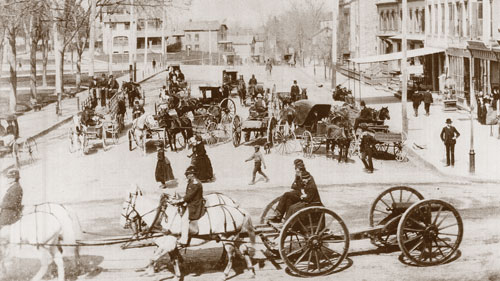
This year (2015), Morristown will observe its 150th anniversary of incorporation as a town, and I will celebrate my 65th year living here. I have long been a collector of memories and stories from the local older people, some born back in 1880s, not long after Morristown broke away from its mother, Morris Township, in 1865.
New Jersey's First Oil Pipe Line
Discovering oil in New Jersey is not usually the happy occasion it may be in other parts of the world. Most often, it means trouble. But the problems discovered a few years ago in Newfoundland, had an interesting history.
One Track Mind
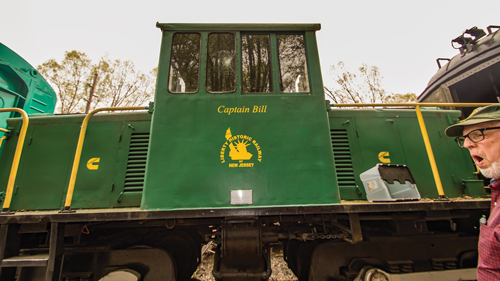
A progression of relentless efforts to commemorate New Jersey's abundant transportation heritage have found renewed focus at Boonton's Grace Lord Park, where the mighty splendor of the Rockaway River gorge traces a forgotten industrial past.
Picatinny Peak
The Cultural Resource Program at Picatinny Arsenal has documented dozens of historic and Native American archaeological sites that tell a story that spans centuries in the New Jersey Highlands.
Place of the Arrow Wood
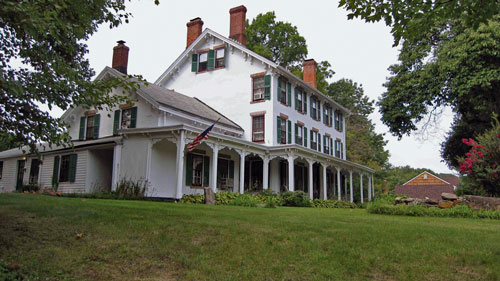
Though transportation, past and present, provides the most striking visual identifiers of southeast Morris County's Hanover Township, the character of the place is rooted in the course of the meandering Whippany River. The water power the river gave rise to mills for agriculture in the 18th Century, and in time, the structures associated with the industrial revolution of the 19th Century.
Roads Best Traveled
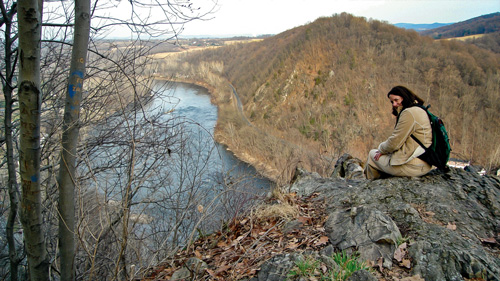
The historic and scenic river towns of Easton, Portland, Columbia, Belvidere and Phillipsburg all merit in-depth exploration of their own, but this forty-eight-mile loop tour emphasizes the old roads connecting them.
Sussex Telephone Company
Sussex County had a its own telephone pioneer, a country doctor who wanted to serve patients on both the New Jersey and Pennsylvania sides of the Delaware River.
The Mighty Musky
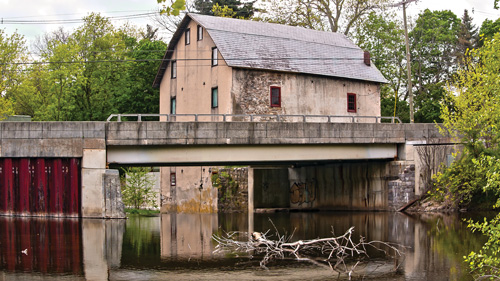
The Musconetcong River runs forty-two miles down from Lake Hopatcong to the Delaware River. But in that brief distance, the river and its valley describe, for better or worse, the evolution of modern American culture in the advance of agriculture, transportation and industry. Exploration of the valley is never short on delightful surprises, and deserves to be on your itinerary. The village of Asbury is a good place to begin.
Union Forge and the Taylor Steelworkers Greenway in High Bridge
The Hunterdon County Borough of High Bridge would on its face appear little different than any of the other many municipalities in New Jersey. However, the sign which welcomes those who pass through this sleepy little town with the words "Settled in 1700", implies a long abiding heritage: a story of the workers who helped shape the history and destiny of the United States.
Canals
All Along The Byway
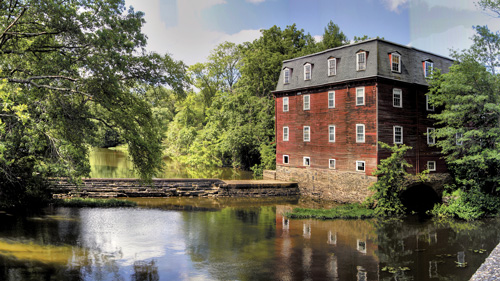
The Millstone Scenic Byway includes eight historic districts along the D&R Canal, an oasis of preserved land, outdoor recreation areas in southern Somerset County
Along the Delaware and Raritan Canal
This narrative portrays working life on the canal in the mid nineteenth century.
Canal Days at Bird's Lock
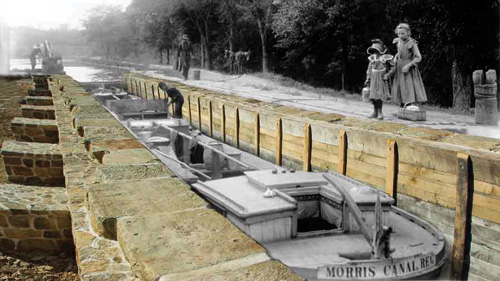
Among the shreds of Morris Canal that have somehow avoided destruction is a quarter-mile watered stretch that leads to Lock 2 East in Wharton's Hugh Force Park. Bird's Lock has been restored to operational status and the lock tender's house rehabilitated as a museum..
Delaware and Raritan Canal State Park
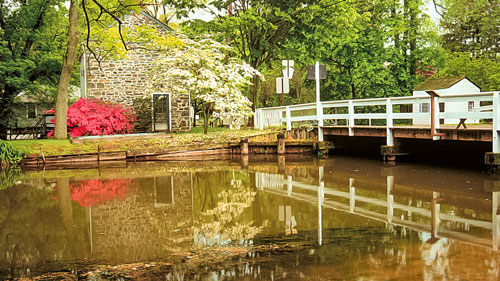
Today the canal's route provides a 67 mile corridor of recreation and wildlife that invites your pleasure by foot, bike or canoe.
Homeward Bound on the Morris Canal
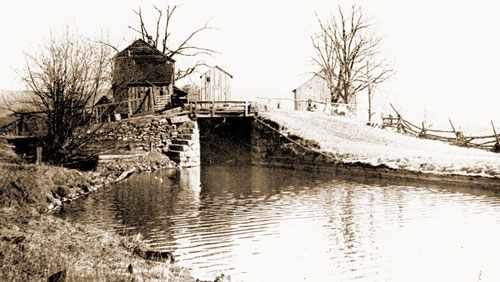
A canal boat captain and her daughters navigate the Bread Lock in June, 1863.
Inland Watercraft of the Skylands
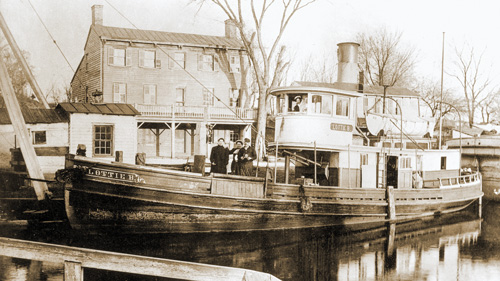
The significance of the New Jersey's inland watercraft and the roles they played in the state's history and development is lost to most people. From the earliest timber rafts on the Delaware River to the sophisticated canal technology and steam passenger transport, navigation has played an important part in inland culture.
Jim and Mary Lee Canal Museum
Thousands of people over the years have visited the home in Warren County where Jim and Mary Lee raised their five children, but Jim Lee, Jr. figures his fifth grade class took the first tour his dad ever gave, back in 1953.
King of Drakesville
Just off the old, now-vanished, Ledgewood Circle, a stone's throw from the mall, the Drakesville Historic Park pays tribute to Morris County's pedigree of innovative pioneers.
Macculloch Hall
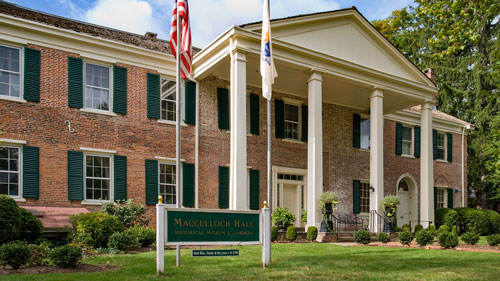
Macculloch Hall Historical Museum truly shines among New Jersey's historic house museums. Built from 1810 to 1819, this Federal style mansion of more than twenty rooms was home to George Macculloch and five generations of his descendants. Macculloch is best remembered as the Father of the Morris Ca
Morris Canal Boat Takes The Long Way Home
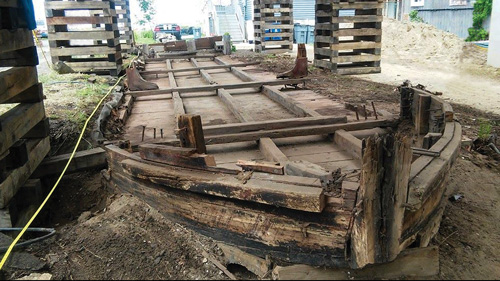
The Canal Society of New Jersey recovered a Morris Canal boat buried under a house on the Jersey Shore and brought it home to Waterloo Village.
One Track Mind
A progression of relentless efforts to commemorate New Jersey's abundant transportation heritage have found renewed focus at Boonton's Grace Lord Park, where the mighty splendor of the Rockaway River gorge traces a forgotten industrial past.
Paint the Town
Bob Bogue's paintings of Boonton were encouraged by his boyhood friends from the 1930s.
The Morris Canal Greenway
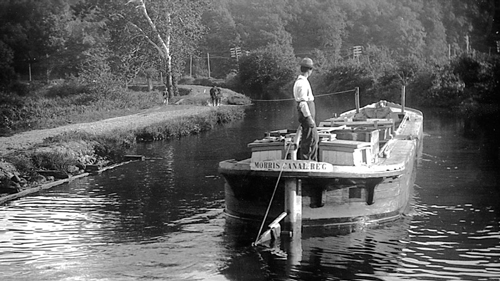
The Morris Canal Greenway encompasses part of the historic Morris Canal's alignment and is a cooperative effort of the New Jersey Division of Parks and Forestry, the Canal Society of New Jersey, Waterloo Village and Friends of the Morris Canal. As you walk the Greenway you will see the remains of canal features, including inclined planes, locks, canal bed, and historic industries and communities directly related to the Morris Canal's operations.
Ye Olde Lake Hopatcong
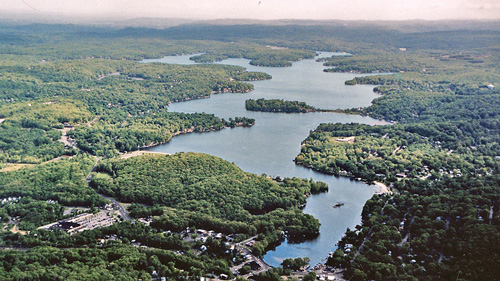
Lake Hopatcong is central to the New Jersey Skylands, not only geographically, but also to the many levels and facets of the region's character.
Railroads
Black River and Western Railroad
Getting lost in the beautiful Hunterdon County countryside, as it stretches out from either side of the right of way of the Black River & Western Railroad is easy. All you have to do is look out the window of the railcar...
Club Car Memoir
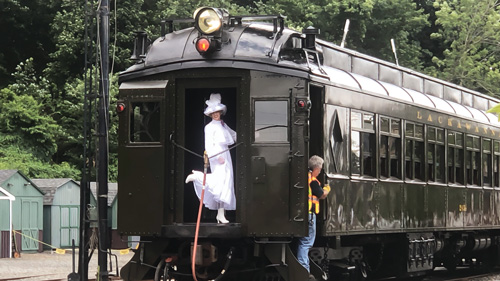
Delaware, Lackawanna & Western Railroad "Club Car" No. 2454 has returned to service following an extensive restoration to its 1930s-era splendor by the Whippany Railway Museum and many benefactors and dedicated volunteers who worked over the course of seven years to turn a rotting hulk into a gleaming gem.
Historic Railroads of Knowlton Township
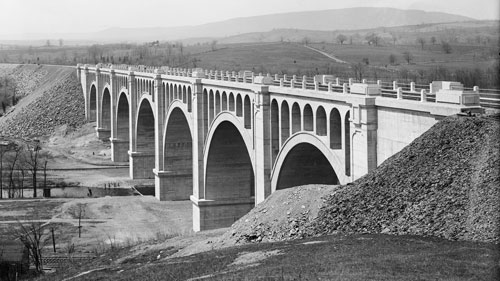
The Warren Railroad was the first to lay track in Knowlton Township when, in 1856, John I. Blair completed its link to the Delaware, Lackawanna, and Western Railroad (DL&W) and the lucrative eastern markets for coal and iron products from Pennsylvania. A century of busy railroading followed.
Hunterdon County Rail Trails
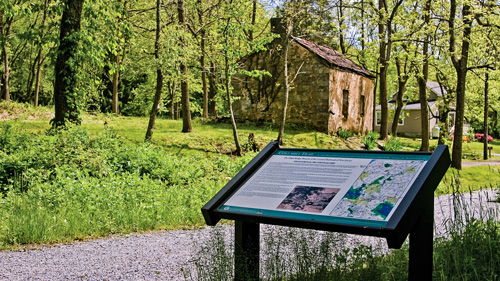
When I first began leading long distance day hikes, I sought out routes along abandoned railroads beginning in northern Hunterdon County. While Hunterdon's system of rails was not as intricate as farther north, where mining was more prevalent, the county was home to many spur lines used to transport passengers and products to charming villages and hamlets.
Karamac Kandy
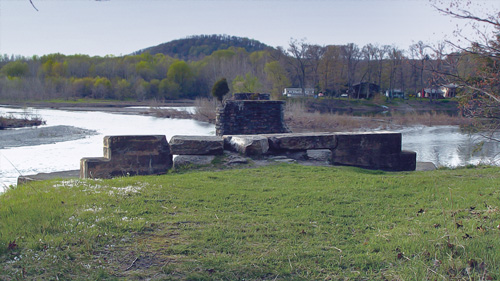
A former railbed just north of the Delaware Water Gap provides another short but satisfying taste of days past in a beautiful setting.
Kittatinny State Park
It is, except for the completion of a few bridges, now possible to hike a continuous distance of nearly 50 miles on public trails through Sussex and Warren counties on the Paulinskill Valley Trail.
Northlandz
Our problem is telling the world what the heck we got here, says Bruce Williams, creator of Flemington's newest attraction. It is indeed difficult to describe the jaw-dropping feeling you get when you take this effortless trip into the realm of unfettered imagination along the mile-long one way labyrinth that is Northlandz.
One Track Mind
A progression of relentless efforts to commemorate New Jersey's abundant transportation heritage have found renewed focus at Boonton's Grace Lord Park, where the mighty splendor of the Rockaway River gorge traces a forgotten industrial past.
Path to Discovery
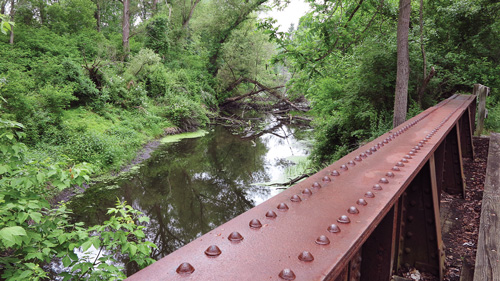
Strolling along the Paulinskill Valley Trail is a fine way to spend a summer day. With access points and parking spaces in many places along this 27-mile soft dirt-cinder path, you can stroll at leisure or pick up the pace as you wish.
Phillipsburg
Phillipsburg has rolled up its sleeves to brand its industrial heritage as a major component of its appeal as a cultural and recreational destination.
Rail Trails
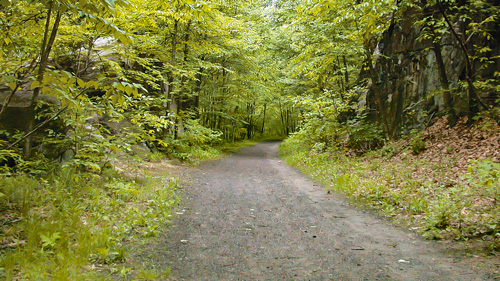
Since my grandfather first took me hiking on the old DL&W line through Warren County, I have had an affinity for exploring the paths left along these rights of way,
Railroad History in New Jersey
If searching out the past while getting a little exercise appeals to you, there are several ways to start your own explorations.
Rock A Bye Rail Trail
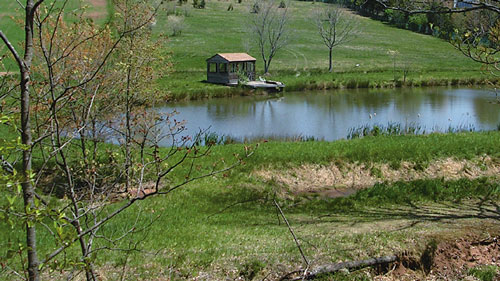
The Rockaway Valley Railroad was about 25 miles long and lasted for about 25 years.
Rumblings in the Railroad Earth
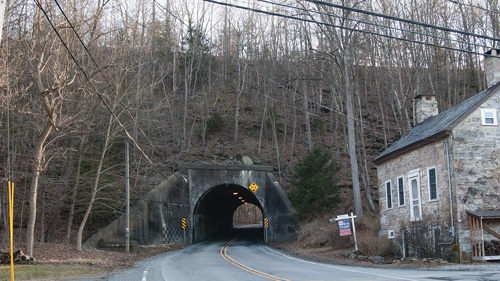
The Delaware, Lackawanna and Western Railroad's construction of a line that altered the contour of both the landscape and culture of Northwestern New Jersey has been a source of wonder since the first shovels hit the ground near the turn of the last century.
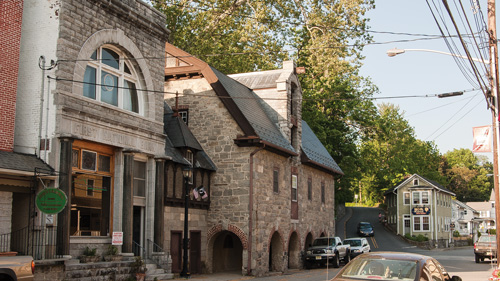
The Lackawanna Cutoff
Following this route takes you along one of the most innovative endeavors of the early part of this century and through some of the prettiest countryside in the northeast!
Trails, Tracks and Taverns
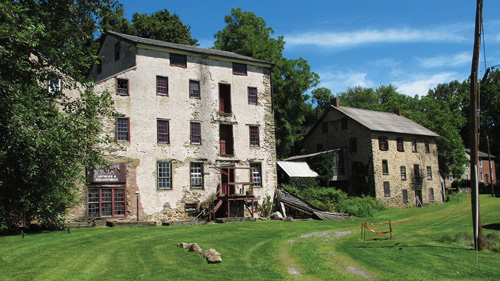
Old roads and new trails in and around Hunterdon County’s Jugtown Mountain offer scenic options for fall explorers as they wander through historic districts, old hamlets, wooded roads, environmental preserves and county parks. The more you look, the more you see!
Transportation Heritage Center
The idea has had time to mature, originating back in 1987 when the original Railroad and Transportation Museum Study Commission began to search for a way to tell the story of New Jersey's rich transportation heritag
Transportation Heritage Collection
These signs are treasures, just a few of many located here on the grounds of the former Phillipsburg water company.
A Moravian Star
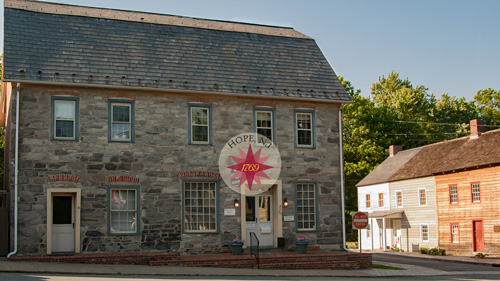
In 2019, the Historic Moravian Village of Hope celebrated 250 years since the Moravians first settled the hills along the Beaver Brook.
Beguiling Bridges
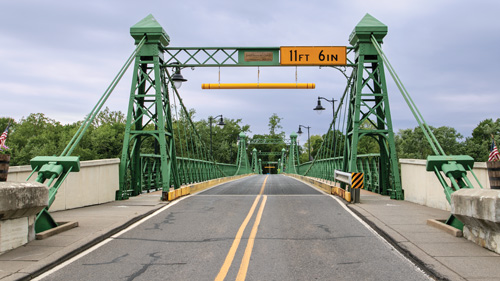
Bridges beguile with their simple beauty. A bridge's context and charm can make your passage delightful.
Clinton and the Red Mill
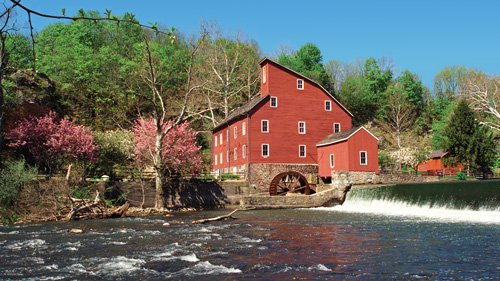
Perhaps no symbol of western New Jersey is better known than the landmark Red Mill at Clinton. Located just below the confluence of Spruce Run and the South Branch of the Raritan, on the west end of Main Street, the mill and its surroundings have played host to a succession of industries and activities spawned by the region's remarkably rich agricultur
Duke Farms: A Thousand To One
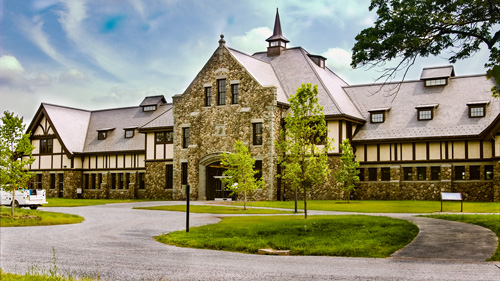
The former one-acre Duke Gardens exhibit has been expanded to one thousand acres open for public exploration and enjoyment for the first time in one hundred years. The gardens have become Duke Farms Living Habitats, and their worldly cultural aesthetic has largely transformed into a focus on what belongs right here, right now.
Duke Gardens
In 1964, Doris Duke completed one of her life's ambitions when she opened a splendidly enchanted acre of land on her expansive Somerville estate for public visitation.
Farmstead Arts Center
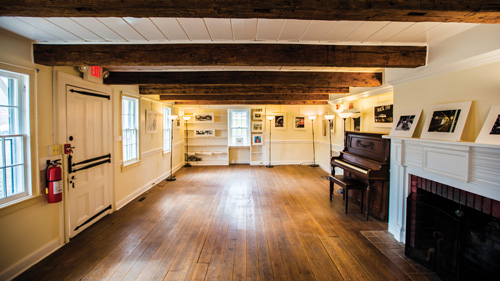
Farmstead Arts, in Basking Ridge, is a vibrant arts center and serves as a model for adaptive reuse of an historic treasure.
Fosterfield Farms
To enter Fosterfields, a working farm since 1760 and New Jersey's first living, historical farm, is to magically step back into the 19th and early 20th centuries
Friends of Wallisch Homestead
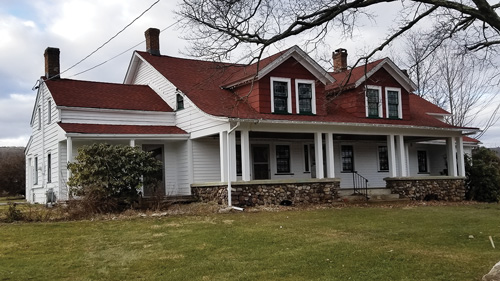
The Wallisch Homestead, more formally known as Tichenor-Gregory-Goodell-Wallisch Homestead, is one of the last remaining properties that reflects Northern New Jersey's agricultural heritage and West Milford's past.
Gifford Pinchot and Grey Towers
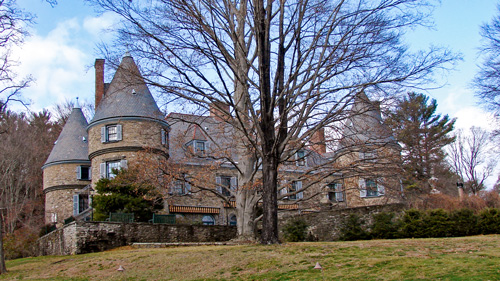
Visitors to Grey Towers will come to understand the importance of the Pinchot family influence on America's conservation ethics and natural resource management policies.
Historic Barns
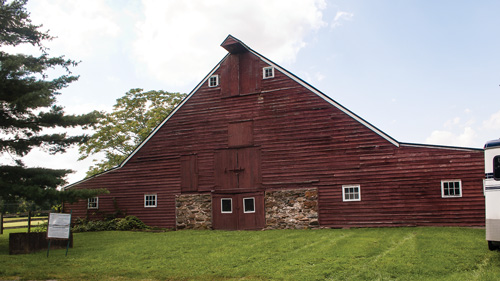
One thing that most people are not aware of, not even native New Jerseyans, is that the west central part of the state has the greatest diversity of barn types perhaps in the entire North American continent. A mixture of German, Holland Dutch and English customs, and a pronounced blending of Old World craft traditions, produced a multitude of various barn constructions. More than 150 years ago, they went truly ballistic with all kinds of barn building expressions.
Historic Graveyeards in Warren County
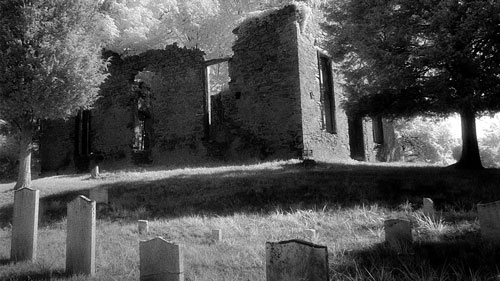
Weekend travelers can find many reasons to visit old churches with graveyards: love of architectural details, interest in gravestone art and epitaphs, a passion for genealogy, a search for history, or simply the enjoyment of walking through a quiet place filled with so many long-ago stories
Historic Home Restoration
Scattered about Northwest New Jersey are many historic churches and schoolhouses that now serve as headquarters for local historical societies or stand as historical monuments to the simplicity of times past.
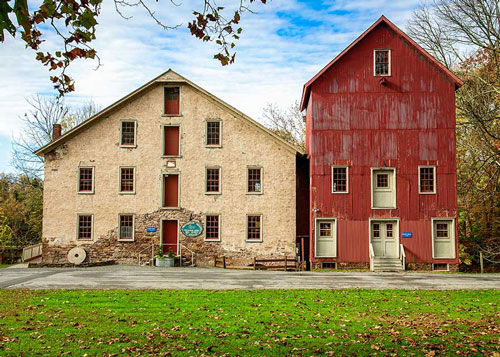
Historical House Restoration
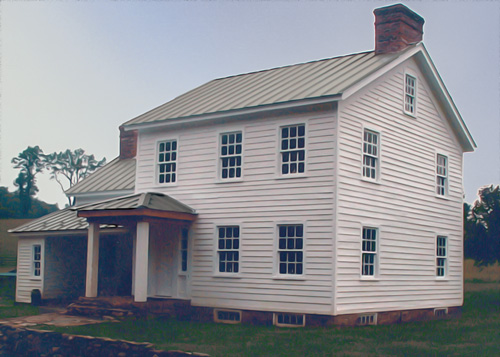
That beauty frequently lies beyond the surface is tried and true wisdom. At first glance, even upon closer looks, THIS old house appeared to be just that: old, in disrepair, and of questionable construction.
History You Can Taste
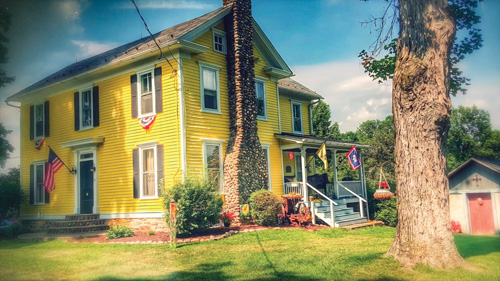
The Garden State Heirloom Seed Society Museum, housed in a nineteenth century farm house, is an interactive and informative stroll through New Jersey?s storied agricultural past.
Lusscroft Farm
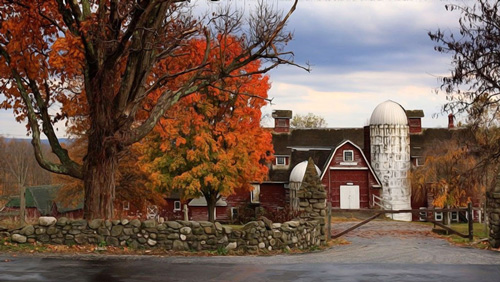
As historic sites go, Lusscroft Farm is one of a kind. Located in the northwest corner of Sussex County, these 578 acres have a rich and diverse past. The Holiday Benefit/ Open House is the perfect time to visit, on December 2 and 3.
Millbrook Village
Millbrook Village, part of the Delaware Water Gap National Recreation Area, is a re-created community of the 1800s where aspects of pioneer life are exhibited and occasionally demonstrated by skilled and dedicated docents throughout the village
Museum Early Trades and Crafts
A newly restored building provides a beautiful setting for new exhibits and interactive programs; a family oriented space where children and adults learn about the tools and trades of the past.
Obadiah LaTourette Mill
The building looms over the bustling Route 24, once called Chester Pike, just east of Long Valley center. At once, upon seeing it, you know that the mill holds a thousand stories and probably a thousand more secrets in its ancient timbers.
Park Place: Montague and High Point
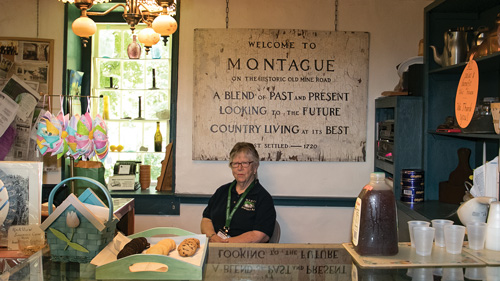
One autumn day you are likely to find yourself headed to New Jersey's northernmost corner in search of fall adventure. You may be guided by way of either of two well-known parks that converge at the top of the state in the township of Montague, and although few visitors care what zip code they' re in, some exploration beyond the park borders can be quickly rewarded.
Ralston Cider Mill
Of all the cider mills in New Jersey, Nesbitt's is the only survivor. For seventy years the stone building sat on some of the most valuable real estate in the world, somehow avoiding adaptive reuse or the bulldozer. This fall, you will be able to experience a rare instance of a remarkable technology, so vital to the heritage of our state. For the first time, Nesbitt's Mill will open its doors for public visitation and demonstration.
Ramsaysburg
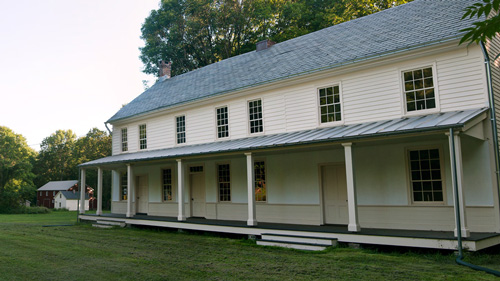
For Sale: Twelve wooded Knowlton Township acres with Delaware River frontage. Commercial highway location. Tavern, barn, cottage, drained pond, smokehouse and shed included. Other remnants on-site. Abandoned railroad nearby. Need
Raoul Wallenberg Conference Center
The rescue and renascence of a dilapidated 170 year old home has resulted in singular opportunities for productive meetings in a state of the art facility on the grounds of the renown 17 room inn and restaurant in Hope.
Roxiticus Congregation
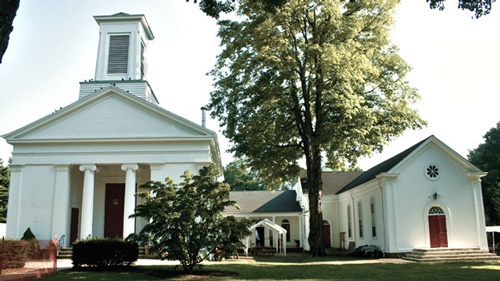
Roxiticus is no longer a name of a place in Morris County. It was an Indian name, given to the region including today's Mendham and Chester Townships.
Schooley's Elusive Spirit
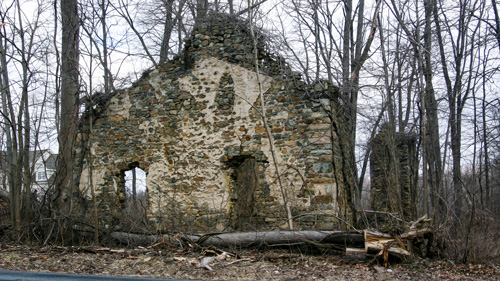
A tour along Schooley’s Mountain back roads through parks, lore, and legends.
The Rose City
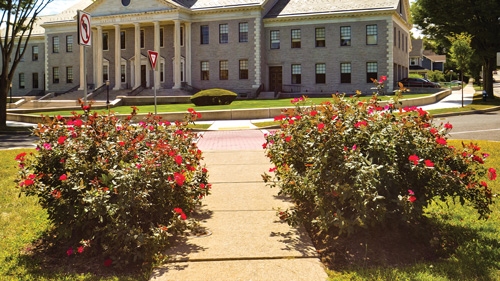
Madison's stately 1935 borough hall, donated by Geraldine Rockefeller Dodge in memory of her only son, is across Green Street from a pocket park maintained by the garden club, a quiet sanctuary of paths and benches surrounding a plot of hybrid tea roses. Other beautiful red roses grow in from of the "Hartley Dodge," as people call the borough hall, and between the railroad tracks and the Madison Station, also built by Geraldine Dodge. The roses themselves are a kind of memorial to Madison's history as The Rose City.
Trickle Down
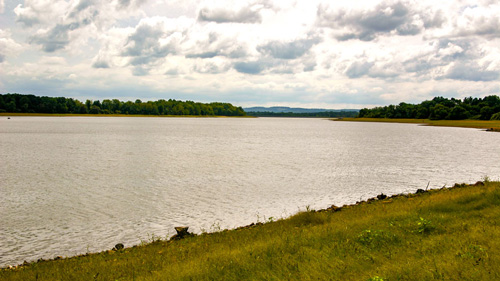
Follow the Spruce Run on its way from the top of Schooley’s Mountain to the reservoir that bears it’s name.
Van Bunschooten Museum
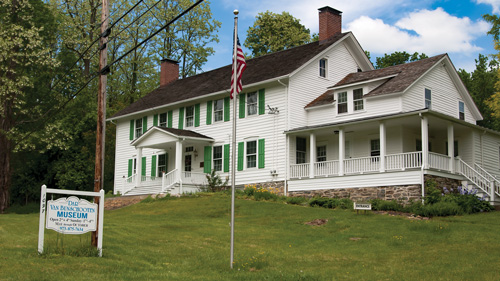
The home was erected for Rev. Elias Van Bunschooten, a Dutch Reformed minister?also a farmer and mill operator?who settled there on one thousand acres along present-day Route 23 in Wantage, just as the road begins its steep ascent towards High Point.
Warren County Farmers Fair
The history of the Warren County Farmers' Fair is a checkered one. The event that we know today -- an agriculturally based, family oriented exposition -- was a long time in coming. It almost didn't make it.
White Lake and the Vaas House
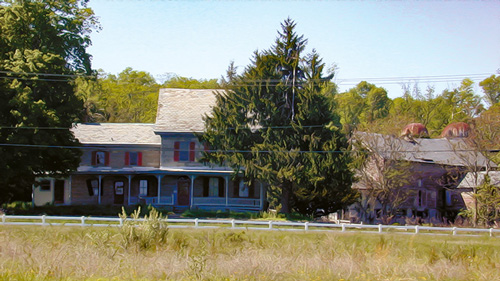
The property, acquired through the state Green Acres Program is enjoyed immensely by fishermen and outdoor enthusiasts. Beyond the crystal clear water and enchanting scenery, there is a story worth knowing.
White Township Farms: The End Of An Era
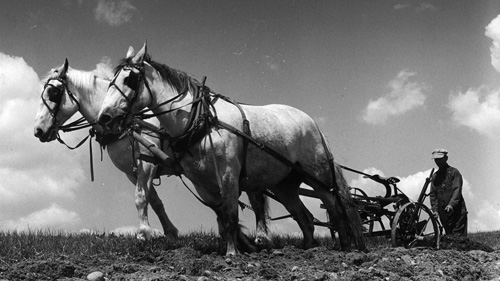
An interesting book about farms in White Township, reminds us of the farmer's ingenuity, and of the values represented by the Warren County's agricultural heritage.
Monuments
Architecture in Flemington
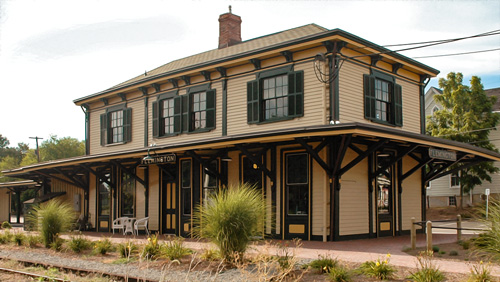
Carefully tended to evoke other eras, the historic district offers something increasingly rare in New Jersey: a place where it seems right and proper to walk, to appreciate the view, to slow down.
Heir Guitar
Mike Esposito remembers Joseph Kekuku, inventor of the steel guitar, who was buried in Dover.
High Point Monument

The Kuser family's wondrous gifts to the state -- the mansion, the land and the monument -- were allowed to fall into a heightened state of disrepair, so much so that the mansion is now gone. The monument was renovated and rededicated in 2005.
Historical Monuments
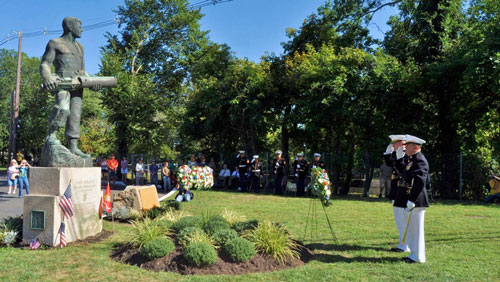
Monuments decorate the Northwest New Jersey in prominent and tucked away places. They are statues and plaques, fine-crafted or natural rock, some are pedestaled and others are so discreet as to appear part of the natural landscape.
Marking Time
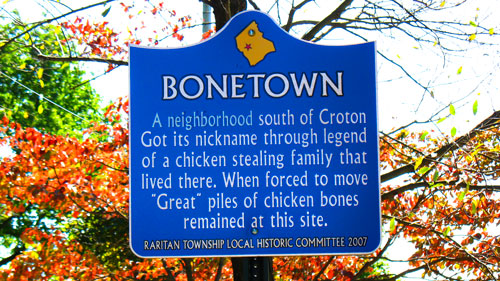
For a little state, New Jersey has a big history, loads of towns, and lots of markers. There are somewhere around 1,200 historical markers in New Jersey, 500 of them in the Northwest Skylands region. Most likely there are many more, because these are only the markers so far recorded at the on-line Historical Marker Database , a remarkable resource that documents over 22,000 historical markers around the world.
The Seeing Eye: Puppy Love
For the formative steps in a guide dog's youth, The Seeing Eye relies on a network of Puppy Raisers throughout New Jersey and eastern Pennsylvania who participate in a program that began in 1942 as a joint effort with 4-H Youth Development.
Museums
Acorn Hall: Light From Within
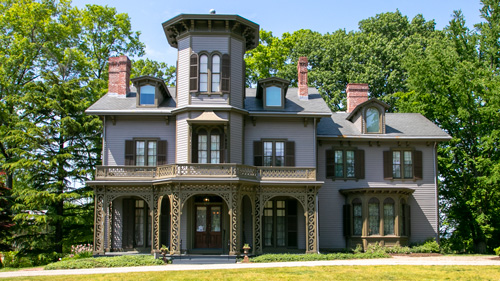
When approaching a big birthday, it never hurts to discover buried treasure in your own backyard. Better yet, your basement. That's where the Morris County Historical Society recently unpacked an artistic gem hiding in plain sight -- a stained-glass window crafted by the New York studio that once rivaled Louis Comfort Tiffany.
Craftsman Farms
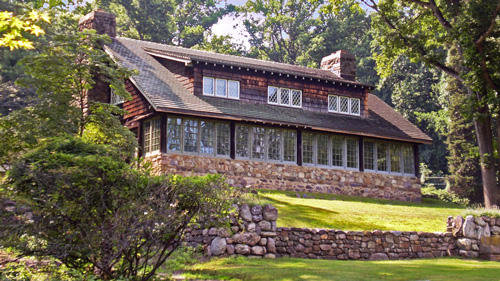
At the turn of the last century a uniquely American tradition of home design and furnishing appeared: clean in line, solid in construction, choice in materials, and given to the aesthetic of a life lived in harmony with nature.The living room at Craftsman Farms nears full restoration to its original appearance. Many of the historic furnishings have been restored to their original locations during the Stickley era.
Iron, Sparta Mountain and Edison
The sustained productivity of the Sparta Mountain iron mines, which began in the late 1700s, attracted the attention of Thomas Edison, who built a massive experimental plant to process iron ore and a namesake village in 1889.
Lenne Lenape Indian Village
The easiest path to an appreciation of the Lenape is across the bridge to the Indian Village at Waterloo. Developed in1988 by archaeologist John Kraft, the recreated village has introduced the Lenape way to hundreds of thousands of visitors.
Macculloch Hall
Macculloch Hall Historical Museum truly shines among New Jersey's historic house museums. Built from 1810 to 1819, this Federal style mansion of more than twenty rooms was home to George Macculloch and five generations of his descendants. Macculloch is best remembered as the Father of the Morris Ca
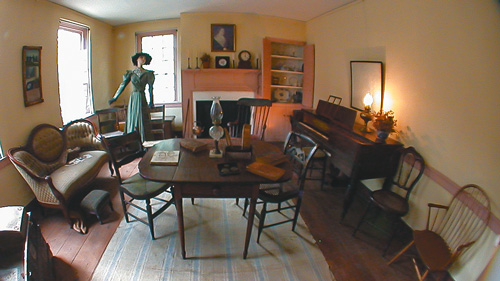
Museum Early Trades and Crafts
A newly restored building provides a beautiful setting for new exhibits and interactive programs; a family oriented space where children and adults learn about the tools and trades of the past.
Museums and Historical Societies
White Township, Holcombe-Jimison, Ledgewood, Califon, Wantage, Stillwater, Space Farms, Hackettstown, Hope, Lake Hopatcong, Lebanon
Museums and Historical Societies
Montague, Sussex County Historical Society, Phillipsburg Historical Society, Pike County Historical Society
Preservation Row
Next time you read about some group adulating an ancient stone house or a dilapidated barn, think about what’s behind the story. There are some innovative ideas out there. Make time to see what they’re up to.
Schuyler-Hamilton House
Romance ensued between Betsy Schuyler and Alexander Hamilton, as the young, ambitious soldier courted the beautiful socialite in this historic Morristown home during the 1779-80 Revolutionary War encampment.
The Big House: Rutherfurd Hall
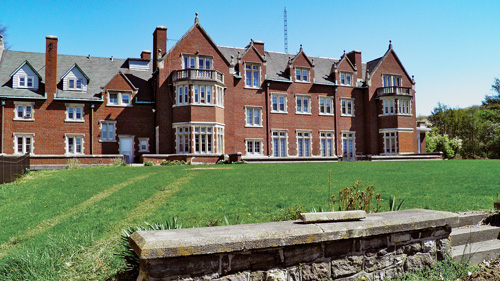
Consider Rutherfurd Hall as refuge and sanctuary in similar ways now, as it served a distinguished family a hundred years ago.
Van Bunschooten Museum
The home was erected for Rev. Elias Van Bunschooten, a Dutch Reformed minister?also a farmer and mill operator?who settled there on one thousand acres along present-day Route 23 in Wantage, just as the road begins its steep ascent towards High Point.
Van Nest Hoff-Vannatta Farmstead
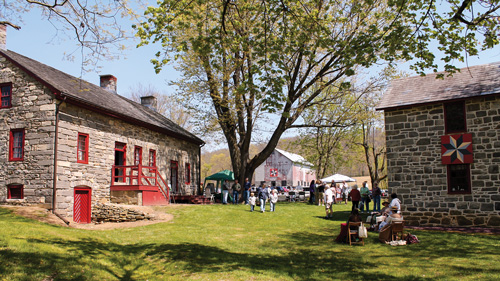
The Van Nest-Hoff-Vannatta Farmstead in Harmony Township reflects three centuries of agricultural practices and rural architecture.
Ye Olde Lake Hopatcong
Lake Hopatcong is central to the New Jersey Skylands, not only geographically, but also to the many levels and facets of the region's character.
Zinc Mines and Fluoresence
The Sussex County Mining Heritage Corridor is a remarkable tribute to the heritage of the men, their mines, and vast mineral riches they discovered. There is no other place like it in this world!